linguistics
-

An In-Depth Guide to Creating a Phonology – Part 5: Phonotactics
So far in this series, I’ve been explaining the various kinds of sounds that you can include in your conlang. But in addition to having a limited inventory of sounds, languages also have restrictions on how those sounds can be arranged in a syllable. These restrictions are called phonotactics. The…
-

A Conlanger’s Guide to the Icelandic Language
In this article, I’m going to try something new. I’ve decided to talk about some features in a language that I have found interesting, which I hope will give you some ideas for your conlangs. The language that I will discuss in this article is the Icelandic Language. Icelandic is…
-
An In-Depth Guide to Creating a Phonology – Part 4: Tones and Pitch Accent
In the previous part, I explained the various different types of suprasegmentals that you could include in your conlang. However, I intentionally left out pitch accent and tone because I wanted to talk about them more in-depth. A lot of people see tone as a difficult concept to grasp, but…
artificial language, Chinese, conlang, Conlanging, constructed language, contour, contour tone, downstep, fictional language, floating tone, language, linguistics, Mandarin, phonetics, phonology, pitch, pitch accent, register, register tone, suprasegmentals, syllable, tone, tone sandhi, tone terracing, tonogenesis, upstep, Worldbuilding -

An In-Depth Guide to Creating a Phonology – Part 3: Stress and Timing
In the previous two parts, I have been talking about consonants and vowels. These are both segmental in nature, which means they can be analysed as distinct segments of speech. In the next two parts, I will be talking about phonetic features that cannot be analysed as discrete segments but…
-
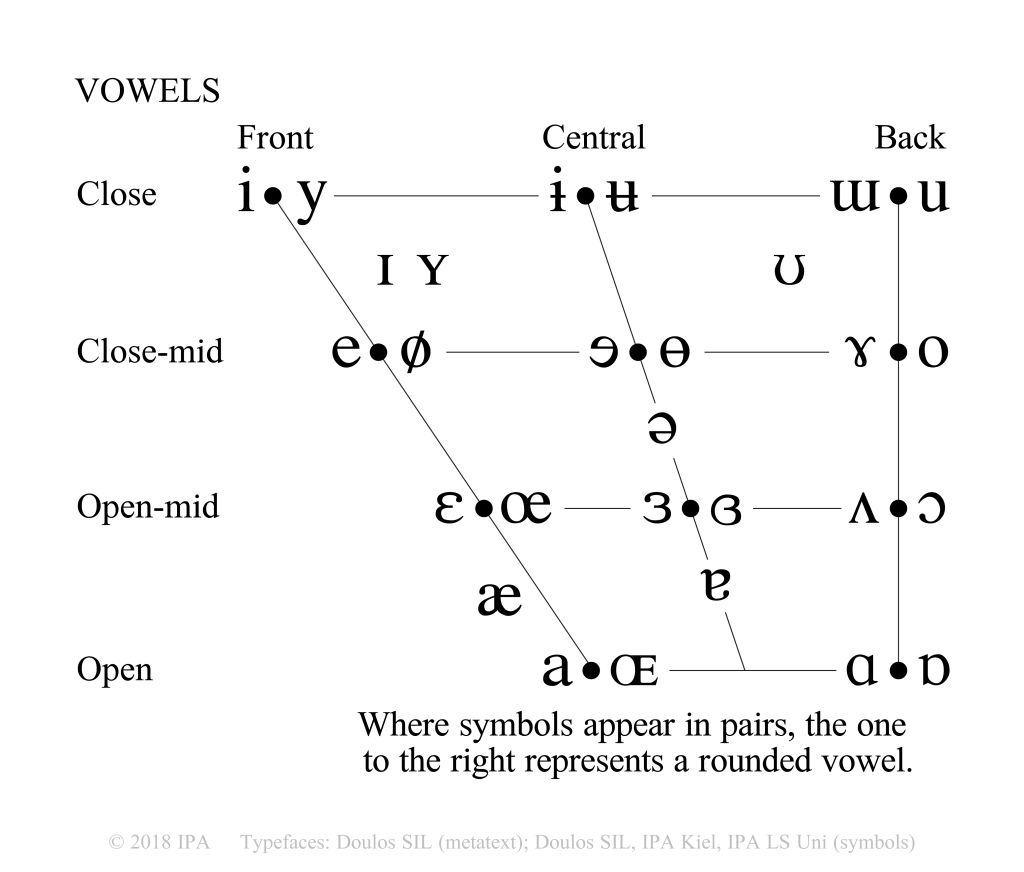
An In-Depth Guide to Creating a Phonology – Part 2: Vowels
In the last part of this series, I discussed how to create a consonant inventory. So in this part, I will be covering vowels. One major misconception about vowels is that English has five vowels. Actually, written English has five letters that represent vowels (sometimes ‘y’ can as well), but…
 Stephen Escher